LGBTQ+ Travel Safety Made Simple: A Step-by-Step Checklist
If you’re here, you’re probably asking the same questions I hear nonstop: Is this place safe for me as an LGBTQ+ traveler? And what do I need to do to reduce the risk of something bad happening? This LGBTQ+ travel safety checklist is my answer to those questions. It contains the best practices I’ve developed over decades of queer travel (and almost a decade writing about it), and it’s divided into two sections. The first section covers what to do before your trip, since LGBTQ+ travel safety actually starts with the decisions you make when planning your travel. Honestly, this is what most people don’t spent enough time thinking about. The second section covers the more typical LGBTQ+ safety advice of what to do (and more importantly not do) during your trip.
Before I share the checklist, one note. I’ve spent years writing about LGBTQ+ travel and talking to travelers and industry insiders, interviewing dozens in my queer travel book.
Safety isn’t something queer people can fully control. It depends on other people.
You might encounter bias in the places with iffy laws where you’re on edge, and you might also experience bias in the safest countries to be queer and the best states for LGBTQ+.
That’s the paradox no one talks about.
This LGBT travel checklist covers all of my best tips, whether you’re going somewhere that’s queer-friendly or culturally conservative. The advice works for solo queer travelers, LGBTQ+ families, and couples.
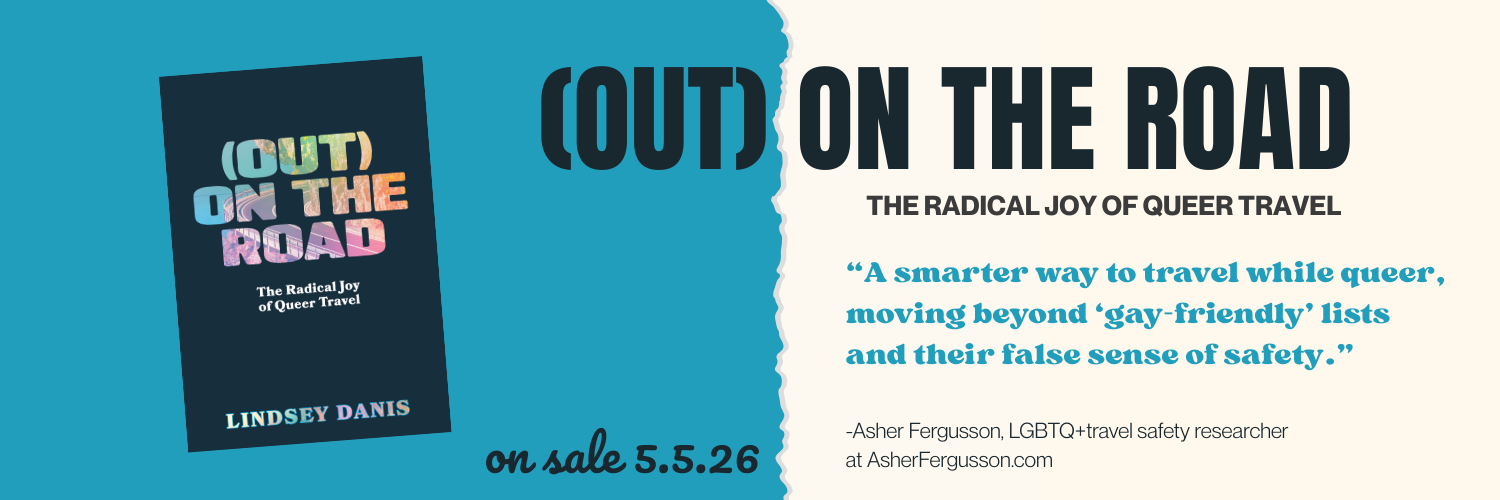
If you want more of the theory behind the simple tips, my queer travel book (Out) On the Road: The Radical Joy of Queer Travel breaks all of this down through real stories, reporting, and practical strategies. It covers not just how to make trips safer, but how to travel more confidence, clarity, and queer joy.
Before Your Trip: LGBTQ+ Travel Safety Assessment and Destination Research
- Research the laws in that country. My favorite general resource is Equaldex, which includes both laws and social attitudes. Spartacus Gay Travel Index and Asher Fergusson’s Trans Safety Index are two other trusted resources for queer travel safety research.
- Remember that laws and social attitudes are not always the same. Queer travelers tend to get more privilege than locals, which means you’ll be less likely to be targeted under anti-queer laws during your trip. Judgy locals, though? You’ll encounter them every day, which is why I always use Equaldex to check social attitudes when planning a trip.
- Are you willing or able to “pass” as straight or cisgender? It’s frustrating but true: Gender typical travelers experience less friction. They can hide in plain sight. Gender nonconforming, nonbinary and trans travelers stand out more, and this can lead to challenges. It’s totally cool to opt for ease on your vacation by passing for cishet or selecting destinations that support gender variance.
- Do you want to be open about your identity and if so with whom? Avoid getting tongue-tied when someone asks how you know your partner, or assumes the wrong pronoun for you by planning in advance how open you want to be about your identity. Need some help brainstorming? Grab my free worksheet for travel scripts that cover many common situations.
- Check visa requirements in the country you’ll be visiting. Never assume that you don’t need a visa or you can get a visa on arrival, as this isn’t always true! Needing to scramble at the last minute because you didn’t plan is expensive.

Before Your Trip: Documents to Take With You
- While it may seem like overkill, same-sex couples and LGBTQ+ parents may want to bring certified copies of important documentation – or have it accessible in a clearly labeled folder back home. Lambda Legal recommends bringing along your marriage license, powers of attorney and, for parents, birth certificates and adoption paperwork. Having the right paperwork can get you out of a jam, such as dealing with an unfriendly hospital that doesn’t want to let you visit a sick loved one.
- Take digital copies of your passport, visa, travel insurance policy number and contact information, and other important information. I always take physical copies in addition to electronic backups, just in case.
- For Americans traveling internationally, sign up for STEP, the Smart Traveler Enrollment Program to receive email notifications about natural disasters, disease outbreaks, security incidents, and other issues that could impact your trip.

Before Your Trip: Finding LGBTQ-Friendly Resources & Community Connections
- Find LGBTQ-owned or affirming accommodations. IGLTA maintains a database of LGBTQ-welcoming hotels, as does the accommodations booking app Misterb&b. Many international hotel chains are queer friendly. Having an LGBTQ-friendly hotel means you’ll have a safe place where you can decompress at the end of the day.
- If you’re taking a group tour, book with an LGBTQ-owned company. Not only will you be with other queer people, you won’t have to explain your needs to the guide. Browse my lists of lesbian tour companies and gay group tours to get started. While some of these companies are nonbinary and trans-inclusive, others aren’t; if in doubt, call them before you book.
- Connect with locals online for tips on bars, events, and community spaces. This is a tried-and-true queer travel tip that I recommend with caveats. Apps like Her or Grindr can be a great way to meet other queer travelers and locals, but these apps have been used for entrapment in countries where it’s not safe to be queer. Always use a VPN when on dating apps and be cautious when meeting up with people via apps.

Before Your Trip: Queer Travel Safety for Trans, Nonbinary & Gender-Nonconforming Travelers
- Will you be passing for safety and ease? Now is the time to pack clothes that will help you blend in. While this can be uncomfortable or a bit dysphoric, it is often preferable to the alternative. Of course, this is totally optional. Many trans and nonbinary travelers opt to present authentically, valuing their personal comfort and wellbeing above all. I go much deeper on the pros and cons of fitting in versus authenticity in my book, so definitely check it out if you want a nuanced exploration of passing privilege during travel!
- Prepare for possible extra scrutiny during immigration and security checks, especially if the gender marker on your ID does not match your appearance.
- Be aware of your rights in security screenings. In the United States, TSA agents cannot legally require you to remove prosthetics or binders.
- Consider joining TSA PreCheck or Global Entry for a smoother travel experience. I was pleasantly surprised how much easier these programs make air travel. I got to skip the invasive body scanners and extra patdowns in favor of a simple metal detector. Suddenly, all the anxiety that came with airport misgenderings was a thing of the past. It’s my #1 travel tip for trans and nonbinary people!
- If you have an ID that cannot be updated, or if you travel with hormones or prosthetics, consider carrying a signed doctor’s note explaining your situation.

Before Your Trip: Health & Medication Considerations
- As soon as you book your trip, check which vaccines may be needed. Make an appointment at a travel medicine clinic if needed.
- Research laws regarding prescription medications before traveling. This includes HIV medications such as PrEP, ADHD medications, as well as medical marijuana and THC products. Commonly countries will let you bring in a 3-month supply of medication for personal use only, but there are exceptions. For instance, Japan only allows travelers to take one month of PrEP.
- Ask your doctor to write a note explaining what medications you’re on and listing their generic names. Keep this letter together with your prescription medications in their original containers.
- Traveling with HIV? Check Positive Destinations to understand regulations in the countries you plan to visit.
- Want to bring contraceptives or toys on your trip? Verify the country you plan to visit allows you to take these items with you. Countries that do not allow sex toys include Thailand, Vietnam, India and the United Arab Emirates. Penalties range from confiscation on the light end to fines and jail time.

During Your Trip: Cultural Awareness & Blending In
- Understand the cultural norms around public displays of affection. Kissing and touching in public are taboo in many cultures for all couples, not just queer ones. Respecting the norms can reduce scrutiny and make your travel experience more easier.
- Learn about the local culture’s norms around gender expression, gender identity and relationships. This covers anything obviously queer, such as whether the place you’re visiting recognizes third genders, as well as cultural norms for men and women. For example, some countries expect modest dress. Showing up in crop tops and short shorts isn’t just insulting, it will get you extra scrutiny.

During Your Trip: LGBTQ+ Travel Safety Essentials
- Book LGBTQ-friendly accommodations. In conservative countries, your best option is to stay at an international hotel chain that has LGBTQ-friendly policies.
- Request two beds instead of one to be on the safe side. Sure, it’s not what you prefer, but if outing yourself to the front desk clerk feels risky, choose the two-bed option to play it safe.
- Be aware of your surroundings when you go out. Especially when settling into a new city, be on high alert anytime you’re outside. Familiarize yourself with landmarks so you don’t get lost (like I always do). Get to know who is around at different times of day. Being observant will help you realize if something seems off, like if you’re being followed down the street.
- Use common sense and trust your gut. If something feels risky, get yourself out of there. That might mean you take the long way around the dark park at night. The flip side of trusting your gut is that if things seem safe, let yourself enjoy them. You don’t need to be in vigilant mode all the time.

There you have it! An LGBTQ+ travel checklist that’s customizable for anywhere you want to go!
Save this post for your next trip. It’s helpful to have everything in one place so you can run through the list and make sure that you’ve covered everything. When you know you’ve taken care of each action item, you can stop second guessing whether you’ll be safe. You did what you could to reduce risk and you know what to watch for during your trip. Your mental load is lighter, which means you can spend more time having fun – not looking over your shoulder and feeling nervous.